Izhaar
Product Lead | Stanford ENGR 245 | Mar 2026 – present
We set out to build an AI interview coach for students. More than 100 interviews with students, career centers, recruiters, hiring managers and founders later, two pivots took us to the other side of the table: AI digital twins for hiring.
Problem
Hiring has a signal-versus-noise problem. With AI, every résumé and cover letter sounds the same, job descriptions don't reflect what teams actually need, and take-home assessments can be solved by a model.
How We Got Here
Weeks 1–2
Started as an AI communication coach for non-native English speakers, a voice AI mock interviewer with rubric feedback. We tested too many segments at once and had to narrow down to one archetype: international students preparing for technical interviews. .
Pivot 1
It wasn't a delivery problem. Students weren't communicating the relevance of their work, so we moved from communication coaching to helping them map their experience to the job.
Pivot 2
Career centers would pay, but not enough to make it a business. Meanwhile every hiring manager we spoke to described the same thing: hiring is broken at every stage. We switched sides and started building for the companies doing the hiring.
Now
AI digital twins for hiring. A candidate persona built from résumé, projects, GitHub, LinkedIn and AI working history meets a role persona built from the job description, company values and the people already on the team, in an agent-to-agent interview.
What We Heard
“You can't tell the difference between a motivated candidate and a mass application anymore.”
“100% of our assessment library is now AI-solvable.”
“If you find the right candidate, we can pay you up to $20k.”
Prototype
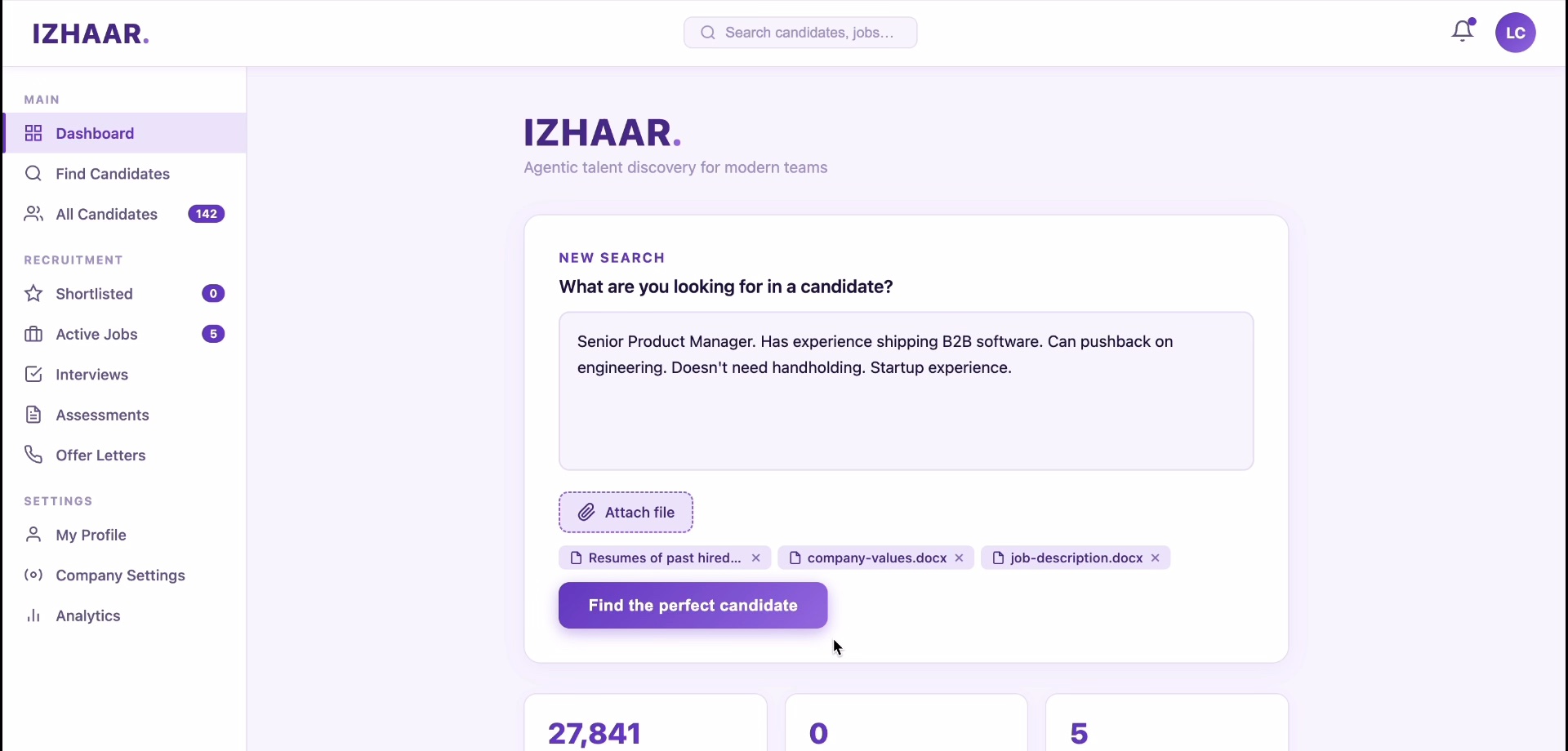
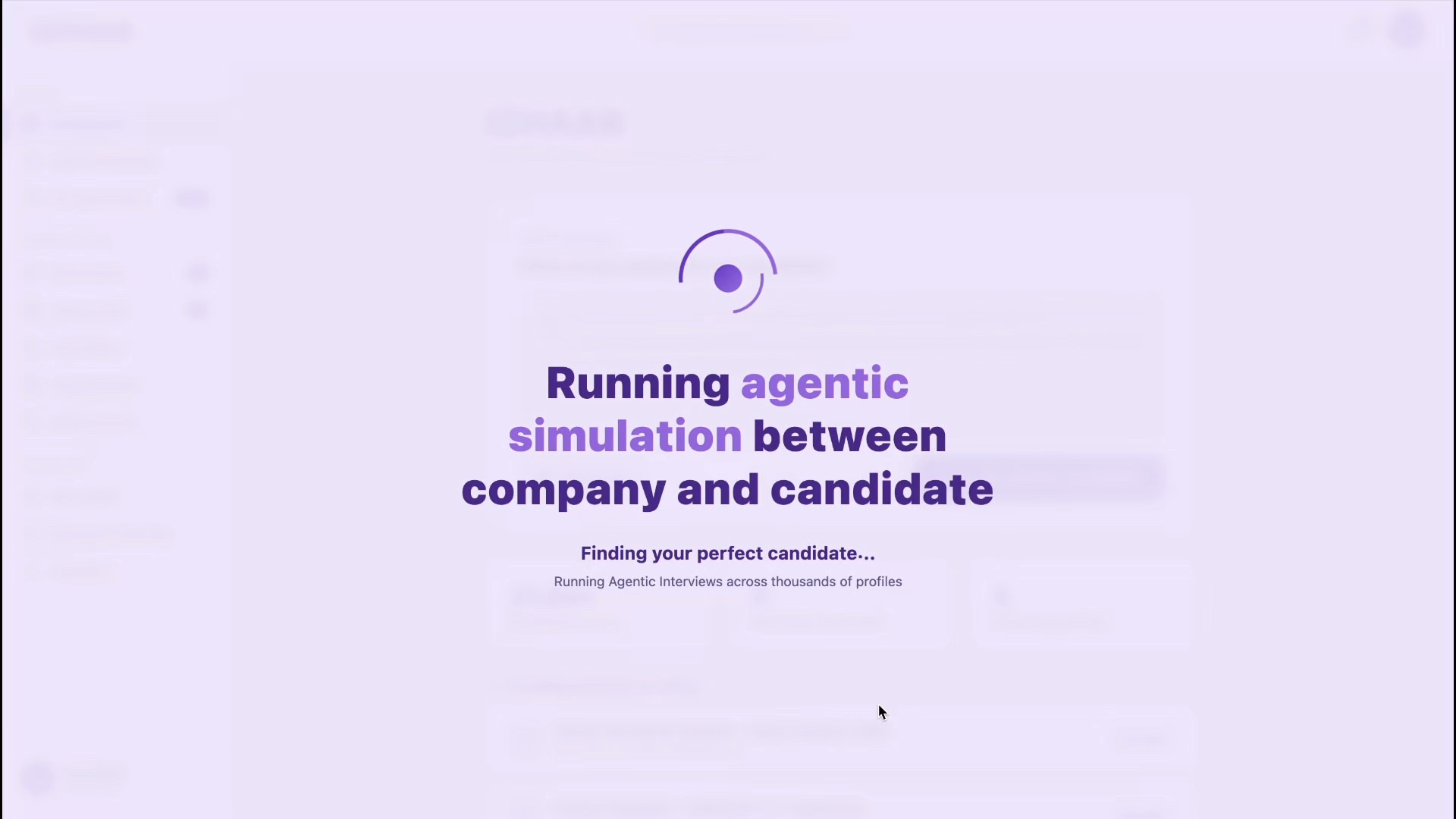
Outcome
Two AI startups offered to pay us $25k for each hire we made for them. For one, we sourced 300 candidates and delivered 27 vetted profiles.